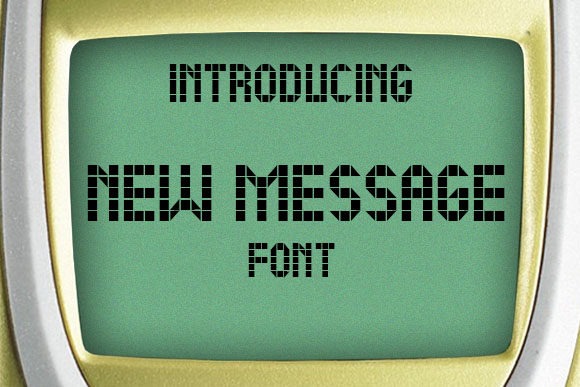
New Message: A Font That Speaks Volumes in Design
When it comes to typography, the right font can elevate a design from ordinary to extraordinary. New Message is one such font that stands out with its bold, expressive character and versatility. Whether you're crafting headlines, body text, or promotional materials, this font has the power to capture attention and convey emotion effectively. But like any tool, using New Message correctly requires understanding its strengths and avoiding common pitfalls.
What Is New Message?
New Message is a display font known for its dynamic and modern appearance. It features a unique blend of geometric shapes and organic curves that give it a distinct personality. This font is especially well-suited for headlines, banners, logos, and other visual elements where impact is key. Its ability to scale well across different sizes makes it ideal for both large-scale print projects and digital content.
Designers, marketers, and content creators often turn to New Message because of its readability and aesthetic appeal. It works particularly well in environments where clarity and visual interest are both important. However, not all uses of this font are created equal, and some common mistakes can undermine its effectiveness.
Common Mistakes When Using New Message
While New Message is a powerful font, there are several ways it can be misused. One of the most frequent errors is applying it to long blocks of text. Although it's designed for headlines and short phrases, using it for extended paragraphs can lead to readability issues. The font's boldness and stylized letterforms can become overwhelming when used for more than a few lines of text.
Another mistake is ignoring the spacing between characters. New Message has a strong presence, and without proper tracking (the space between letters), it can appear cluttered or unbalanced. Always take the time to adjust the spacing to ensure the text looks clean and professional.
Some users also overlook the importance of contrast when pairing New Message with other fonts. While it's a standout font on its own, combining it with complementary typefaces can enhance the overall design. However, choosing fonts that clash in style or weight can create a disjointed look.
How These Mistakes Affect Your Work
Misusing New Message can have real consequences on your project's success. Poorly spaced or overused text can reduce readability, making your message harder to understand. In marketing or branding contexts, this could lead to confusion or a lack of engagement. Additionally, an unbalanced use of the font might give your work a less polished appearance, which can affect professionalism and credibility.
In web design, incorrect application of New Message can also impact user experience. If the font doesn't load properly or is too heavy for the platform, it can slow down page performance. This is especially important for mobile users who rely on fast-loading content.
Practical Tips for Using New Message Effectively
To make the most of New Message, consider the following tips:
- Use it for headlines and short phrases: Reserve New Message for titles, subheadings, and brief statements. This ensures it remains impactful without becoming distracting.
- Adjust spacing carefully: Experiment with tracking settings to find the optimal balance between legibility and visual appeal. Most design software offers tools to fine-tune these settings.
- Pair it wisely: Choose fonts that complement New Message in terms of style and weight. For example, a clean sans-serif font can provide a good contrast and improve readability in body text.
- Test across platforms: Ensure that New Message renders correctly on different devices and browsers. Some fonts may look slightly different depending on the system they're displayed on.
Real-World Examples
Imagine designing a website for a new product launch. You decide to use New Message for the main headline. Instead of applying it to the entire landing page, you use it only for the title and a few key call-to-action buttons. This approach keeps the focus on the most important elements while maintaining a cohesive design.
In another scenario, a small business owner wants to create social media graphics. They use New Message for their post captions but pair it with a simple, readable font for the rest of the text. This combination ensures that the message is clear and visually appealing without being overwhelming.
What to Check Before Using New Message
Before committing to New Message, take a moment to evaluate a few key factors. First, consider the context in which you'll be using the font. Will it be for print, digital, or both? Each medium may require slight adjustments in how the font is applied.
Next, check the licensing agreement. Some fonts come with restrictions on commercial use or require attribution. Make sure you understand the terms before incorporating New Message into your project.
Finally, review the font's compatibility with your chosen platform or software. Not all fonts work seamlessly across every application, so it's wise to test them before finalizing your design.
By taking these steps, you can avoid potential issues and ensure that New Message enhances rather than hinders your work. With thoughtful application, this font can become a valuable asset in your creative toolkit.